
India's drug price regulator, NPPA, has revised downward the maximum retail price of 543 anti-cancer medicines, effective November 9. This follows an announcement enforcing trade margin rationalisation on 137 non-scheduled anti-cancer drugs, leading to significant price drops for several key brands.
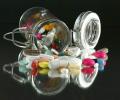
The Supreme Court has questioned the Centre's decision to cap trade margins on anti-cancer drugs at 30 per cent, asking why similar restrictions could not be extended to other medicines and medical consumables, citing glaring disparities between procurement costs and maximum retail prices (MRPs).

A political controversy has erupted in Tamil Nadu over the distribution of trilingual medicine covers in government hospitals, with the DMK alleging a covert implementation of a three-language policy, while the ruling TVK accuses the opposition of political opportunism.

Delhi Police has busted an illegal call centre in Pitampura, northwest Delhi, where twelve people were arrested for allegedly impersonating doctors to dupe customers into purchasing Unani medicines. The fraudsters reportedly used confidential data stolen from a healthcare company and its distributor.

Karnataka Health Minister U T Khader announced the busting of a major interstate counterfeit drug racket, leading to an arrest and an ongoing investigation into the suspected supply of fake medicines to hospitals. The racket involved procuring cheap drugs, refilling them, and relabelling them as premium brands, with seizures worth Rs 5 crore. A Special Investigation Team (SIT) has been formed to probe the widespread network.
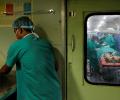
Prof Ajit Kumar Chaturvedi, Vice-Chancellor of Banaras Hindu University, highlighted Artificial Intelligence's transformative potential in healthcare, emphasising its role in augmenting doctors' capabilities and enhancing efficiency. Speaking at PGIMER's Foundation Day, he stressed the need for India to develop AI solutions tailored to its unique healthcare realities, moving beyond being a mere consumer of Western-trained systems. PGIMER Director Vivek Lal also detailed the institute's expansion and commitment to affordable healthcare.

Buyers need to assess whether an OPD policy offers them enough usable benefits to justify the additional premium.

'You have made a film which is rage bait so that more people will watch it and get incited.'

The directive comes amid concerns over steep mark-ups on medicines and medical consumables sold at hospital pharmacies.

Private hospitals accounted for 30.8 per cent of current health expenditure in FY23, while pharmaceuticals and medical goods contributed more than 21 per cent, underlining continued dependence on private healthcare and medicine spending.

'Indiscriminately withdrawing these drugs could lead to a worsening of other associated conditions.'

Dedicated Ayush dispensaries increased from 26,130 in 2013-2014 to 37,804 in 2024-2025, while hospitals rose much more slowly, from 3,605 to 3,885.

Over 2,000 pulmonologists and healthcare professionals from India and abroad will gather in Jaipur for NAPCON 2026 to discuss the increasing burden of pulmonary diseases and the critical impact of air pollution on lung health. The conference, organised by the National College of Chest Physicians, India, and the Indian Chest Society, will feature discussions on diagnosis, management, and prevention of conditions like COPD and asthma, alongside advances in interventional pulmonology.

The Indian government has decided to cap trade margins on all non-scheduled anti-cancer drugs at 30 per cent of their maximum retail price. This move aims to improve affordability and ensure continued availability of these life-saving medicines, potentially saving cancer patients an estimated Rs 2,500 crore annually. The decision, expected to be implemented later this month, will affect 110 anti-cancer drugs, including 35 patented ones.

Several Indian-Americans have achieved significant victories in the US midterm elections, with five securing seats in the House of Representatives and Maryland Lieutenant Governor Aruna Miller winning re-election. The article profiles these successful candidates, highlighting their backgrounds and contributions to American politics.

The Samosa Caucus, an informal group of Indian-American lawmakers, is set to expand its presence in the US House of Representatives following the recent elections. With Democrats gaining control of both the House and Senate, re-elected members like Ami Bera, Ro Khanna, Suhas Subramanyam, and Pramila Jayapal will be joined by newcomers Pia Dandiya and Amish Shah, significantly increasing Indian-American representation on Capitol Hill.

India is proposing the Data Empowerment and Protection Architecture (DEPA) for AI Training, a national framework designed to enable startups, researchers, and companies to train AI models using data from hospitals, banks, and public agencies while ensuring privacy and security. This initiative aims to unlock significant AI-driven value for India's GDP by 2030.
Indian-American Democratic lawmakers Ami Bera, Ro Khanna, Suhas Subramanyam, and Pramila Jayapal have been re-elected to the US House of Representatives, with Pia Dandiya making her debut, marking a strong showing by the community in the recent midterm elections where Democrats gained control of both the House and Senate.

India has voted in favour of a UN General Assembly resolution urging the US to end its economic, commercial, and financial embargo against Cuba. The resolution, adopted on Wednesday, saw 130 countries support the call to lift restrictions that have severely impacted Cuba's economy, healthcare, and food production. The article also details a heated exchange between US and Cuban diplomats during the UNGA session.

Indian-American physician Amish Shah has made history by becoming the first from the community to represent Arizona in the US Congress. Shah, a Democrat, defeated Republican Jay Feely in Arizona's First Congressional District, flipping a Republican-held seat. A three-term member of the Arizona House of Representatives, Shah campaigned on issues like lowering costs, expanding healthcare, and solving the water crisis, and his victory is part of a broader trend of Indian-American candidates succeeding in US elections.

Police in Bengaluru have arrested Balasubramanian, a partner in DM Pharma, in connection with an interstate counterfeit drug racket. This arrest follows the apprehension of alleged kingpin Prashanth Rajan Babu. The Special Investigation Team is probing the supply chain, financial transactions, and distribution channels of fake medicines worth nearly Rs 5 crore, which were being relabelled as premium brands.
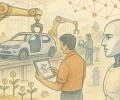
IIT-Kharagpur announced the establishment of India's first dedicated academic school for Physical Artificial Intelligence (AI), named the Benjamin Gupta School of Physical AI. Funded by a Rs 35 crore investment, including contributions from alumnus Vinod Gupta and an anonymous donor, the school will focus on developing intelligent systems that interact with the physical world, moving beyond conventional data-driven AI. Academic programmes are expected to commence soon, aiming to foster reliable and responsible AI technologies for various applications.
India's apex drug regulator cautioned against antibiotic self-medication and their use for conditions where antibiotic treatment is not clinically indicated, particularly viral infections, the common cold and fever.

Prashanth Rajan Babu, the alleged kingpin of an interstate counterfeit drug racket, has been arrested at Kempegowda International Airport in Bengaluru after absconding to Azerbaijan. He is accused of leading a network that refilled cheap bulk drugs into new vials and relabelled them as premium imported brands, with a previous raid seizing fake medicines worth Rs 5 crore.

Prashanth Rajan Babu, the alleged kingpin of an interstate counterfeit drug racket, has been arrested at Kempegowda International Airport in Bengaluru. He had been absconding and was reportedly hiding in Azerbaijan. The arrest follows a major raid in August where fake medicines worth Rs 5 crore were seized, and a Special Investigation Team was formed to probe the network.

They had bought Rs 29,631 crore worth of shares in August.

The GST Council has approved a proposal allowing pharmaceutical companies to claim Input Tax Credit (ITC) on free samples and goods destroyed or written off due to expiry, effective from the next fiscal year. This move aims to support manufacturing, liquidity, and exports within the sector.

Prashanth Rajan Babu, the alleged kingpin of an interstate counterfeit drug racket, has been arrested at Kempegowda International Airport in Bengaluru after absconding in Azerbaijan. He is accused of leading a network that refilled cheap drugs and relabelled them as premium brands, with drugs worth Rs 5 crore seized earlier.

The Andhra Pradesh government has launched a drone delivery initiative to provide healthcare services to remote tribal regions of Alluri Sitarama Raju district, transporting diagnostic samples, essential medicines, and critical medical supplies.

A country that makes the isotope sets the timetable for everyone who needs it.


Atomic Energy Commission chairman Ajit Kumar Mohanty stated that India is on the verge of a significant technological transformation, driven by advancements in AI, quantum technologies, and other fields. Speaking at BIT Mesra's convocation, he emphasised the need for strong indigenous capabilities, skilled professionals, and interdisciplinary collaboration to achieve a developed India. Other speakers, including BIT Mesra's Chancellor and Vice Chancellor, echoed the importance of continuous learning and contributing to national progress.
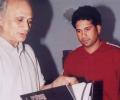
Sachin Tendulkar remembered his father Ramesh's timeless lessons on honesty, character and avoiding shortcuts, while launching a fellowship to honour his legacy and expand opportunities for young professionals.

Indian drug regulatory and law enforcement agencies have stepped up their efforts against the illegal manufacture and distribution of spurious drugs. This intensified action follows the seizure of a "misbranded" batch of Abhayrab rabies vaccine in Delhi, prompting nationwide vigilance and arrests.

Zoho cofounder Sridhar Vembu dismisses exaggerated fears about AI's catastrophic potential and global development pauses. He advocates for India to adopt an independent AI strategy, fostering partnerships while avoiding entanglement in US-China tech rivalry. Vembu stresses extensive investment in foundational R&D across sectors, distinguishing it from costly frontier AI model development. He also highlights concerns about AI's impact on human judgment, skill erosion, and job disruption, particularly in software engineering, while remaining optimistic about new economic opportunities.

Students are learning to combine technology with agriculture, healthcare, biotechnology, architecture and fashion, explains Mandeep Singh, assistant professor and deputy dean, Lovely Professional University.

Of the 37,448 candidates registered for the Foreign Medical Graduate Examination (FMGE) in June, 36,288 appeared and 4,635 qualified.

For a child who is six years old, one hour is the limit, says rediffGURU Dr Deepa Suvarna.
Zoho co-founder Sridhar Vembu argues that predictions of AI's catastrophic outcomes are overstated and a global pause in AI development is improbable. He urges India to adopt an independent AI strategy, focusing on extensive foundational R&D across sectors, while remaining wary of market monopolisation attempts by major tech players. Vembu also highlights concerns about AI's impact on human judgment, skill development, and job markets, particularly for junior professionals.

The Budget reframes healthcare as a strategic national capability, backing biopharma innovation, workforce expansion and technology-led governance to power India's next growth phase.
